

Life Vest
Company Profile
Established in 1998, Jiaxing Rongsheng Lifesaving Equipment Co.,Ltd. is a professional manufacturer and exporter that is concerned with the design, development and production of marine life-saving equipment & fire fighting equipment. We are located in Jiaxing City which is closed to Shanghai, with convenient transportation access.
We have passed the international quality management system certification (ISO9001/ISO22000) since 2002, all products obtain CCS certificate (China Classification Society), most of products obtain MED certificate through DNV, RINA, KR, LR.
Why choose us?
High quality
Our products are manufactured or executed to very high standards, using the finest materials and manufacturing processes.
Professional team
Our professional team collaborate and communicate effectively with one another, and are committed to delivering high-quality results. They are capable of handling complex challenges and projects that require their specialized expertise and experience.
Rich experience
Our company has many years of production work experience. The concept of customer-oriented and win-win cooperation makes the company more mature and stronger.
One-stop solution
We can offer a range of services, from consultation and advice to product design and delivery. It is a convenience for the customers, as they can get all the help they need in one place.


What is Life Vest
A life vest, also known as a life preserver or life jacket, is a flotation device designed to keep an individual afloat in water. It works by providing buoyancy, which is the ability of an object to float due to the displacement of a certain volume of water. The design of a life vest ensures that when immersed in water, it inflates and supports the wearer's head above the waterline, allowing them to breathe and remain conscious.
Life vests are critical safety equipment for anyone engaging in water activities, including boating, swimming, or working on or near water bodies. Proper selection, fitting, and regular inspection of life vests are essential to ensure their effectiveness in an emergency situation.
Benefits of Life Vest
Increased buoyancy
The primary benefit of a life vest is its ability to increase an individual's buoyancy in water. By displacing a larger volume of water, a life vest helps the wearer stay afloat and keeps their head above water, allowing them to breathe and remain conscious.
Improved visibility
Many life vests come in bright colors, which can improve visibility in the water. This is particularly beneficial in situations where rescuers are searching for individuals in the water, as the bright color can help rescuers quickly locate the person in distress.
Enhanced safety
Wearing a life vest reduces the risk of drowning, especially in situations where individuals may unexpectedly find themselves in the water. For example, boaters can capsize or fall overboard, and swimmers can encounter strong currents or unexpected waves. A life vest provides an extra layer of protection in these situations.
Comfort and convenience
Life vests are designed to be comfortable and convenient to wear. They come in various sizes and styles to fit different body types and ages, and many are adjustable to ensure a proper fit. This makes it easy for individuals to wear a life vest without feeling restricted or uncomfortable.
Versatility
Life vests are versatile and can be used in a variety of water-related activities, including swimming, boating, fishing, and surfing. They are also available in different types and styles, such as inflatable vests, foam vests, and hybrid designs, to suit the specific needs and preferences of different users.
Peace of mind
Wearing a life vest can provide peace of mind for individuals and their loved ones. Knowing that they are protected in the water can help individuals relax and enjoy their water-related activities without constantly worrying about their safety.
Legal compliance
In many jurisdictions, wearing a life vest is required by law for certain water-related activities, such as boating or swimming in designated areas. Wearing a life vest ensures compliance with these regulations and avoids potential fines or penalties.
Types of Life Vest
Type I life jackets (offshore life jackets)
These are the most buoyant type of life vests, offering at least 22 pounds (10 kilograms) of buoyancy. They're designed for open sea conditions where there's a risk of encountering heavy seas, wind, and cold water temperatures. Type I vests keep the wearer's face and mouth out of the water even if unconscious, and they're often self-righting. Examples include the traditional "horse collar" design.
Type II life jackets (near-shore buoyant vests)
With at least 16.5 pounds (7.5 kilograms) of buoyancy, Type II vests are less bulky than Type I and are suitable for calm, inland waters where there's little risk of encountering heavy seas. They're easier to take off than Type I vests and are commonly used for recreational boating and general aquatic activities.
Type III life jackets (throwable devices)
These are ring-shaped buoys or cushion-like devices meant to be thrown to someone who is struggling in the water. Type III devices must provide at least 16.5 pounds (7.5 kilograms) of buoyancy and are often used on boats as an additional safety measure. They're not meant to be worn but can be a lifesaver in an emergency.
Type IV life jackets (special use devices)
These are devices designed for specific activities and environments. They include life vests made for kayakers, surfers, or anglers. Type IV devices are engineered to be highly buoyant and are often inflatable, providing mobility and flexibility while still ensuring safety. They're not meant for extended treading water but are suitable for quick dips or falls into the water.
Inflatable life jackets
These are a subset of Type IV devices. Inflatable life vests are worn and can be activated manually or automatically upon submersion in water. They're favored by fishermen, sailors, and others who prefer unrestricted movement and comfort. However, they require proper maintenance and testing to ensure they will function correctly in an emergency.
Child life jackets
Specialized life vests are designed for children, taking into account their smaller body size and weight. These vests come in various sizes and buoyancy ratings appropriate for different age groups, ensuring that young children receive the necessary support to stay afloat.
Ski/tow life jackets
These are designed for water sports enthusiasts who are frequently towed behind boats. They have high-cut fronts to allow for a better towing position and are usually made of durable materials to withstand the rigors of active use.
Winged life jackets
Often used by commercial fishermen, these vests have built-in "wings" that provide additional flotation on the sides. They're designed to keep the wearer stable in the water and are particularly useful in situations where the user might be in the water for extended periods.
Material of Life Vest

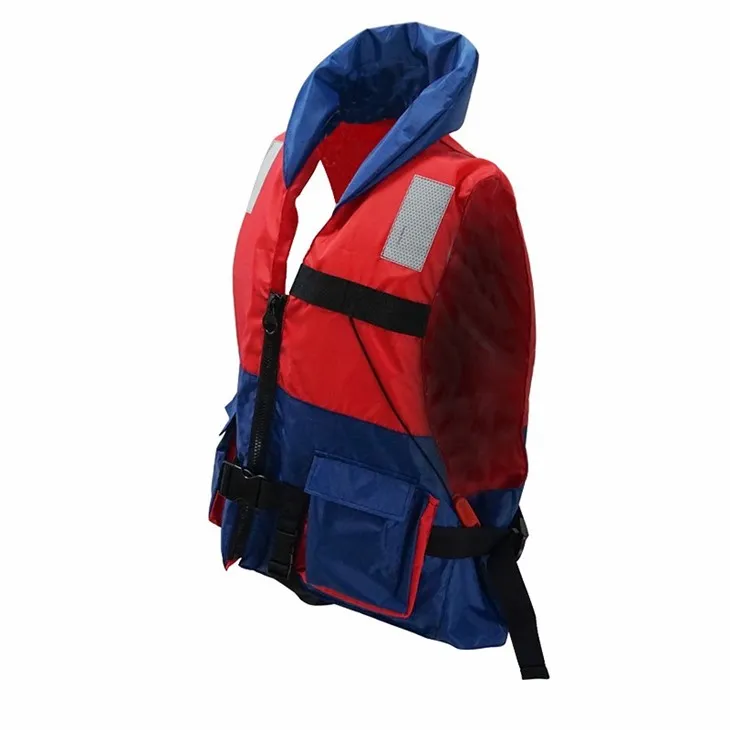


Life vests are typically constructed from a combination of materials designed to provide maximum buoyancy, durability, and comfort. The primary materials used in life jacket construction include:
Polyethylene foam (PE): This closed-cell foam is lightweight, buoyant, and resilient. It's often used in the core of life vests to provide the necessary flotation. PE foam retains its buoyancy well even after prolonged exposure to water.
Ethylene-propylene diene monomer (EPDM) rubber: This synthetic rubber is resistant to UV radiation, ozone, and weathering. EPDM is commonly used for the outer shell of life vests, providing a durable barrier against environmental degradation.
Nylon: Nylon is a synthetic fabric known for its strength, durability, and resistance to abrasion. It's widely used for the straps and outer cover of life jackets, ensuring that the vest remains securely fastened during use.
Polyvinyl chloride (PVC): PVC is a versatile plastic material that can be formulated to be flexible or rigid. It's used in life vests for its durability and resistance to moisture, chemicals, and extreme temperatures. Rigid PVC may be used in the structural components of life vests, while softer PVC might be used for the outer shell or lining.
Inflatable materials: Inflatable life vests use materials like neoprene, nylon, or polyester for the outer shell, combined with a bladder typically made of urethane-coated nylon. The bladder contains a gas, such as air or inert gases, which inflates upon contact with water or manual activation.
Vinyl nitrile (VN) foam: Similar to PE foam, VN foam is another buoyant material used in life vests. It has good resistance to oil and chemicals, making it suitable for marine environments where exposure to hydrocarbons is possible.
Closed-cell foams: These include not only PE and VN foams but also other specialized foams that provide buoyancy while preventing water absorption. This property is critical to maintaining the life vest's integrity and buoyancy even when submerged.
When selecting materials for life vests, manufacturers balance factors such as buoyancy requirements, comfort, durability, ease of donning and doffing, and regulatory compliance. The chosen materials must also be compatible with each other to prevent deterioration and ensure the life vest performs as expected throughout its service life. Regular inspections and maintenance are key to ensuring the continued reliability of life vests in emergency situations.
Application of Life Vest
Cruise ships and passenger ferries
These vessels are required to carry a sufficient number and type of life vests to accommodate all passengers and crew. They are usually stowed in accessible locations and are part of the emergency response protocol.
Water sports and adventure activities
Participants in water sports such as surfing, sailing, kayaking, and jet-skiing wear specialized life vests tailored to the specific activity. These vests are designed to be hydrodynamic and may have features such as padded collars for neck support or cut-outs that allow for a better body position during the activity.
Search and rescue operations
Rescue teams and lifeguards use life vests equipped with features like grab straps, which allow for easy retrieval of individuals in distress. These vests are designed for maximum mobility and quick removal if the situation demands it.
Military and defense
Military personnel use life vests as part of their combat gear when engaging in maritime operations. These vests may integrate communications equipment, first aid kits, and other survival tools. They are designed to be rugged and adaptable to a variety of operational scenarios.
Inflatable life jackets
Inflatable life jackets are popular for sailors, fishermen, and others who require freedom of movement. They are compact, lightweight, and can be manually or automatically inflated upon immersion in water. Regular inspection and maintenance are vital to ensure their reliability.
Specialized applications
Some life vests are designed for specific purposes, such as scuba diving or ice rescue. Scuba vests are often integrated with buoyancy control devices, while ice rescue suits are fully encapsulated and provide insulation against frigid waters.
Regulatory compliance
In many regions, there are strict regulations governing the use of life vests, including the type required based on the size of the vessel, the number of passengers, and the conditions of the water. These regulations are enforced to ensure that everyone on board has the best chance of survival in the event of an accident.
Design and prototyping
Engineers design life vests based on intended use, target demographic, and compliance with relevant safety standards. Prototypes are created to test the design’s functionality, comfort, and buoyancy before moving forward with mass production.
Material selection and testing
Quality materials such as closed-cell foams, fabrics like nylon, and coatings like PVC are sourced. Each batch of materials undergoes rigorous testing to confirm its buoyancy, durability, and resistance to water absorption.
Cutting components
Using computer-controlled cutting machines, the materials are precisely cut into the shapes needed for different components of the life vest, such as the body panel, straps, and flotation pads.
Assembly
The cut components are assembled together. Straps are sewn onto the main body panel, and the flotation materials are attached. For inflatable life vests, the bladder is assembled separately and later integrated into the final product.
Integration of accessories
Additional safety features such as whistles, lights, or pockets are attached. These accessories enhance the life vest’s usability and visibility in emergencies.
Quality control
Each life vest is inspected for any defects, proper assembly, and adherence to design specifications. Buoyancy tests are performed to ensure the vest meets the required flotation standards.
Packaging and labeling
Once approved, the life vests are packaged appropriately for shipping and labeled with information such as size, buoyancy rating, care instructions, and safety standards compliance.
Distribution
The packaged life vests are distributed to retailers or directly to organizations that require them. Distribution methods may vary depending on the scale of production and the destination of the products.
Storage and shelf life considerations
Life vests must be stored in dry conditions to maintain their buoyancy and integrity. Exposure to excessive heat or prolonged dampness can degrade the materials over time.
Maintenance and care instructions
Manufacturers provide care instructions to extend the life of the life vests. This includes regular inspections, cleaning guidelines, and recommendations for replacement once the life vest has been used extensively or has shown signs of wear.
Components of Life Vest
Flotation materials
The primary function of a life vest is to float an individual in the water. To achieve this, life vests are filled with buoyant materials such as closed-cell foam (like EVA or PE), which does not absorb water and maintains its buoyancy. The foam is cut and shaped to fit comfortably around the wearer's body.
Outer shell
The outer shell of a life vest is usually made from durable fabrics like nylon or polyester, which offer resistance to abrasion and UV rays. It serves as a protective layer over the flotation foam, keeping it intact and preventing degradation from environmental factors.
Chest panel
The chest panel is a padded area that rests against the wearer's chest. It is designed to distribute pressure evenly and provide comfort. In some life vests, the chest panel incorporates a pocket or pouch for storing small items.
Waist and shoulder straps
Straps are crucial for securing the life vest properly on the wearer's body. They are typically adjustable to accommodate different body sizes and are made from strong webbing material that won't break under strain. Quick-release buckles are often used to allow for rapid removal in an emergency.
Neck support
In certain types of life vests, especially those designed for children or non-swimmers, a padded neck support may be included to keep the wearer's head properly aligned and reduce the risk of water entering the airways.
Reflective tape
For enhanced visibility in low-light conditions, life vests are often equipped with reflective tape. This helps rescuers locate individuals in the water even when it's dark or foggy.
Grab handle
A grab handle is a loop of webbing that allows others to easily grasp and remove the person from the water. It is typically located on the front of the life vest for quick access.
Attachment points
D-rings or other attachment points are provided on the life vest to allow wearers to clip on safety gear such as whistles, lights, or knives. These can be essential tools for signaling for help or surviving until rescue arrives.
Automatic inflation system (inflatable vests only)
Inflatable life vests incorporate an automatic inflation system that deploys CO2 cartridges when submerged in water or when activated manually by the wearer. This system inflates a bladder within the vest, providing significant buoyancy.
Manual inflate/deflate hose (inflatable vests only)
For manual control, a hose with a mouthpiece is attached to the vest, allowing the wearer to inflate or deflate the bladder as needed. This provides the flexibility to adjust the level of buoyancy according to changing conditions.
How to Maintain Life Vest
Regular inspections
Inspect life vests regularly for any signs of wear and tear. Check for rips, tears, discoloration, or loss of buoyancy in the flotation materials. Pay special attention to seams, straps, and buckles for fraying or damage.
Buoyancy testing
Conduct buoyancy tests to verify that the life vest remains functional. Submerge the vest in water and make sure it remains afloat with no sagging or excessive waterlogging of the flotation materials.
Strap and buckle maintenance
Check all straps and buckles for tightness and proper operation. Adjust straps as necessary to maintain a snug fit. Clean any debris from buckles and lubricate moving parts if necessary to prevent corrosion.
Storage
Store life vests in a cool, dry place away from direct sunlight and moisture. Avoid storing them in areas where they could be crushed or compressed, as this may damage the flotation materials.
Cleaning
When necessary, clean the life vest with fresh water to remove dirt and salt. Use a soft-bristled brush for stubborn stains and rinse thoroughly. Air dry completely before storage. Do not use harsh chemicals or bleach as they may damage the materials.
Inflation system checks (inflatable vests only)
Ensure that the CO2 cartridges for inflatable life vests are within their expiration dates and securely fastened. Test the inflation system periodically to confirm it activates automatically upon contact with water or when manually operated.
Manual inflate/deflate hose checks (inflatable vests only)
Inspect the manual inflation hose for any signs of wear, such as cracks in the mouthpiece or kinks in the tubing. Test the inflation and deflation mechanisms to ensure they work smoothly without leaks.
Attachment point integrity
Verify that all D-rings and attachment points are secure and free of corrosion. Test any attached safety gear (whistles, lights) to ensure they are operational.
Neck support and chest pad condition
Examine the neck support and chest pad for any hardening or deterioration that could affect comfort or performance. Replace padding if it becomes brittle or loses its cushioning effect.
Compliance with standards
Ensure that the life vest continues to meet the safety standards and regulations set forth by relevant authorities. This may involve periodic re-certification or replacing the vest if it no longer complies with current standards.
How to Choose a Life Vest
User demographics
Identify who will be using the life vest. Different age groups, swimming ability levels, and body types require specific types of life vests. Children, non-swimmers, and adults each have unique life vest designs to accommodate their needs.
Certification standards
Look for life vests that meet recognized safety standards such as the United States Coast Guard (USCG) approval for marine activities or the EN ISO 12402 standard for recreational use. These certifications indicate that the life vest has been tested and meets certain buoyancy requirements.
Buoyancy rating
The buoyancy rating of a life vest indicates the amount of weight it can support in water. Choose a life vest with sufficient buoyancy to hold the wearer afloat, factoring in the individual’s weight plus extra for clothing and any gear they might be carrying.
Type of life vest
Decide between an inflatable life vest and a foam life vest based on the intended use. Foam life vests are more durable and do not rely on a mechanism, making them ideal for children and non-swimmers. Inflatable vests are more compact and comfortable but require regular maintenance and inspection of the inflation system.
Adjustability and comfort
Ensure that the life vest fits well and is comfortable for the intended user. Look for adjustable straps and buckles that can accommodate different body sizes and provide a snug fit. Comfort features like padded panels and neck supports can enhance wearability.
Visibility features
Choose a life vest with high-visibility colors or reflective tape for better visibility in poor lighting conditions. This can be critical for rescue operations in low-light environments.
Additional attachment points
Consider whether additional attachment points for safety gear like whistles, lights, or signal devices are necessary for the intended use. These can be particularly useful in marine environments where signaling for help is crucial.
Size and fit
Measure the individual for whom the life vest is intended and choose the correct size. A properly fitting life vest should be snug without being restrictive and should not ride up when the wearer is in the water.
Maintenance requirements
Evaluate the maintenance required for the life vest. Inflatable vests need regular inspection of the inflation system, while foam vests generally require less maintenance beyond regular visual inspections and cleaning.
Budget
Determine your budget for a life vest. Keep in mind that the cheapest option may not always be the safest or most suitable. Investing in a high-quality life vest that meets safety standards can be a worthwhile expense.
How a Life Vest Work

Life vests are designed to keep an individual afloat in water by providing buoyancy. The way a life vest works depends on its type—whether it's made of foam or inflatable materials—but the fundamental principle behind all life vests is Archimedes' principle, which states that a body immersed in a fluid experiences an upward force equal to the weight of the fluid displaced by the body.
Life vests operate on the principle of providing sufficient buoyant force to counteract the wearer's weight when submerged in water, keeping them afloat. Foam life vests achieve this through the inherent buoyancy of the foam material, while inflatable life vests rely on an automatic or manual inflation system that deploys when the wearer enters the water. Both types are designed to be comfortable, secure, and effective in a variety of aquatic settings.

Certifications

Our Factory
Established in 1998, Jiaxing Rongsheng Lifesaving Equipment Co., Ltd. is a professional manufacturer and exporter that is concerned with the design, development and production of lifesaving equipment. We are located in Jiaxing City, with convenient transportation access. All of our products comply with international quality standards and are greatly appreciated in a variety of different markets throughout the world.
Covering an area of 8600 square meters, construction area of 12800 square meters, we now have over 130 employees.


FAQ
Q: What is a life vest?
Q: How does a life vest work?
Q: Are there different types of life vests?
Q: What is the difference between foam and inflatable life vests?
Q: How do I know what size life vest to get?
Q: Can I modify my life vest?
Q: Can I swim with a life vest?
Q: How do I properly inflate an inflatable life vest?
Q: How do I maintain my life vest?
Q: Can I wear a life vest under my clothing?
Q: What is the USCG approval?
Q: How often should I replace my life vest?
Q: What is the EN ISO 12402 standard?
Q: Can a life vest save my life in rough waters?
Q: Is a life vest enough to prevent drowning?
Q: Can life vests be worn by pregnant women?
Q: How do I choose a life vest for my child?
Q: Can I wear a life vest while scuba diving?
Q: What should I do if my life vest inflates accidentally?
Q: Can I wear a life vest while kayaking?
We're professional life vest manufacturers and suppliers in China, specialized in providing high quality products and service. We warmly welcome you to wholesale cheap life vest from our factory. Contact us for more details.
Dragon Boat Life Vest, Float Vest, Paddle Board Life Jacket